
So I got back from Italy like three weeks ago and I’m still not over it, which is becoming a problem because I have a job and a life and I cannot keep daydreaming about a tomato I ate in Puglia. But here we are. I’m writing this in sweatpants, missing the linen pants I basically lived in for a month, and I figured if I’m going to spiral I might as well put it on the internet and call it content.
Here’s the thing nobody really tells you about doing an “Italian summer.” You see it all over Pinterest and Instagram and it looks like a costume you can put on for two weeks. Linen this, lemon that, a little wicker basket, a boat, done. And then you actually go and you realize it’s not a costume. The Italians have figured something out that the rest of us are missing, and once you spend enough time over there you kind of start to feel it in your bones. Or maybe that was the focaccia. Hard to say.
Anyway. I’ve been to Italy probably ten times now if I’m being honest, including a long stretch this summer that just wrecked me in the best way, and I have a lot of opinions. So let me just dump them all out here in case you’re planning a trip and you want to skip the rookie mistakes that I, a seasoned Italy person, still somehow manage to make every single time.
Okay, First – When Is the Best Time to Visit Italy in Summer (and Please, Please Avoid August)
Let me save you some pain right out of the gate. I went to Cinque Terre in August one year. Once. I will never do it again and I would not wish it on my worst enemy. The trains were so packed I had to stand for an hour with my face in someone’s armpit, the towns were heaving with people, and the heat was the kind that makes you sit on a curb and seriously consider just flying home early.
If you can pick when to go, pick June or September. Late May and early October are also kind of magical and way quieter. July is bearable. August is when literally every single Italian goes on vacation at the same time, so the cities empty out, every coastal town fills up with three times its normal population, prices go through the roof, and it’s just hot in a way that’s hard to describe unless you’ve felt Italian afternoon sun bouncing off white stone.
If August is your only option though, please don’t cancel your trip. I’ve done August more than once and survived. You just have to play it smart. Book everything way ahead, like hotels and restaurants and ferries, because everything sells out. Go south or to the islands where there’s actually a sea breeze. And whatever you do, don’t try to sightsee from like 11am to 4pm. That’s siesta time for a reason. Get up early, hit the sights when the light is gorgeous and the piazzas are empty, take a long lunch, nap, then come back out around 5 or 6 like the locals do. Trust me on this one.
Oh, and a thing nobody warns you about: Italian places mostly don’t have great air conditioning. Like, restaurants will just kind of not have it. Hotels will advertise AC and then it’ll be either really weak or only run at night. The one place that’s always cold? Churches. The big old ones are basically free air conditioning, and there’s a lot of beautiful art in there as a bonus.
Where to Go: My Best Italian Summer Destinations (Capri, Positano, Puglia, Sicily – and Everything In Between)
This is where I’m going to lose objectivity, because I have favorites and I’m not going to pretend otherwise. But let me try to break it down by what kind of trip you’re after, because that’s really the question.
If you want the Postcard Italian Summer: Amalfi Coast and Capri
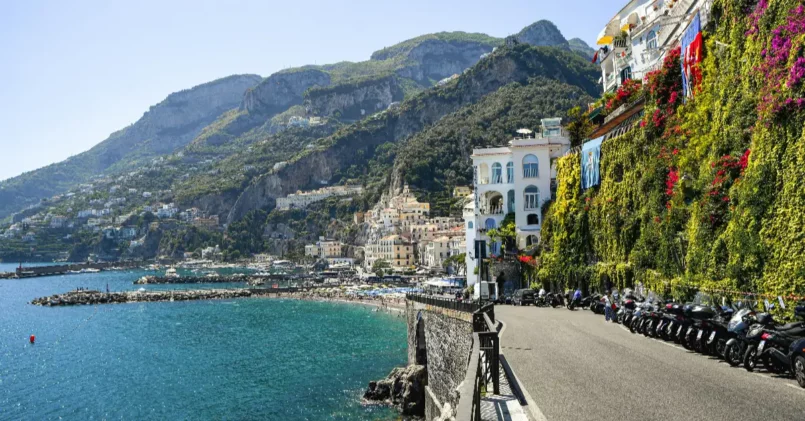
Listen, I know it’s the obvious answer. I know it’s been done. I know there are reels of it on your feed every five seconds. But the Amalfi Coast is so beautiful it kind of breaks your brain a little bit. Positano really does cascade down a cliff in pastel colors. The lemons really are the size of your face. The road really is so twisty that I genuinely thought I was going to be sick on the bus to Amalfi town and had to do that breathing thing you do at the dentist.

My single favorite thing to do on the Amalfi Coast? Get on a boat. Just rent one for the day, or do one of those small group boat tours, and see Positano from the water. You skip the crowds, you find these little coves that you can’t reach from land, and you get the angle of Positano that you’ve seen in every photo ever. Worth every euro.

From Positano you can grab a ferry over to Capri, which yes, is touristy, but is also one of the most genuinely stunning islands I’ve ever seen. Same advice – rent a boat. The Faraglioni rocks from the water hit different. There’s also this spot called Fiordo di Furore a bit further along the coast that I want to put on a billboard because nobody talks about it enough. It’s this tiny fjord between two cliffs with an arched bridge overhead and you can cliff-jump into the sea. I did a backflip off it (badly) and felt like I was 19 again.
If you want the slow Italian summer of your dreams: Puglia
If I had to send you to one region this year and one region only, it’d probably be Puglia. It’s in the heel of the boot down south, and the whole place feels like it’s running on a totally different clock. Stone towns bleached white in the sun, olive trees everywhere, water so clear you can see the rocks twenty feet down.
You have to go to Polignano a Mare, which is this cliff-top town with that famous little cove beach you’ve definitely seen on Instagram. Go early in the morning or late afternoon though, because at midday it is full of people elbowing each other for the same photo and it kind of kills the vibe.
Then drive like 30 minutes inland and you hit Alberobello, which is this whole village of these little white stone houses with cone-shaped roofs called trulli. Looks like something out of a fairy tale. Fun random thing I learned: they originally built them without using any mortar, so if the tax collector showed up they could quickly take them apart and pretend they didn’t have permanent buildings. Medieval tax evasion. Honestly iconic.
Further north in Puglia there’s an area called Gargano that nobody really talks about and I don’t understand why. Baia delle Zagare has these massive white cliffs that come right down to the sea and these sea stacks rising out of the water that look unreal. I spent a whole day there swimming and finding little sea caves and I think I forgot what year it was.
If you want history, volcanoes, and granita: Sicily
Sicily is its own thing. It’s almost like a separate country and I mean that as a compliment. Taormina is up on a hill with views over Mount Etna and a little beach down below called Isola Bella that you can reach by cable car if you don’t feel like walking down. Cefalù is one of those places that hits really hard at sunset, when all the old buildings turn this warm orange color, and you find yourself sitting on the beach being weirdly emotional about a town you only just arrived in.
Now let me tell you about my Mount Etna fail because I cannot stop thinking about it. So Etna is this massive active volcano and you can actually drive partway up, then take a cable car higher, then take these special vehicles even higher to get close to the active craters. Cool, right? Yeah, unless you show up at 4:25 in the afternoon thinking you have time, which I did, only to watch them close the lift in my face at 4:30 sharp. I hiked around the lower craters instead which was still really cool but I am genuinely still annoyed about it almost a year later. So if you’re going, go in the morning. Not the afternoon. Not at 4:25. The morning.
And if you have more time and want a real adventure, the Aeolian Islands off Sicily’s north coast are unbelievable. There’s seven of them, all volcanic, and one of them is Stromboli – an actually active volcano that shoots lava out the top at night. Like a private fireworks show that nature is putting on for you.
If you want the clearest water of your life: Sardinia
If you go to Italy mainly for the beach? Sardinia. The water is so clear it looks photoshopped. Cala Goloritzé is this absurd beach with these big pointy rock formations and green cliffs and water that’s somehow both turquoise and deep blue at the same time.
You can hike in (moderate, doable, takes about an hour) or you can come by boat. I’ve done both. The boat is dreamier, the hike feels more earned. Either way, when you finally see the beach you’ll make a sound. Some kind of involuntary “oh my god” sound. You’ll see.
Italian Coastal Towns You’ve Never Heard Of (Probably)
Okay so everyone goes to Positano. Everyone goes to Capri. And they should, because they’re stunning. But let me tell you about the places I’d send my best friend to if she wanted to feel like she discovered something cool.
Tropea down in Calabria is built on top of a cliff and has this little sea-stack church just off the coast that looks unreal. Legend says Hercules founded it. I just spent two days walking around eating gelato and looking at the view and it was perfect.
Then there’s Ponza, which is this little island off the west coast that I literally had no idea existed until I saw a video of it. Two-hour ferry from the mainland, and there’s this beach called Chiaia di Luna – crescent-moon-shaped, massive white cliffs, and you reach it through this ancient Roman tunnel. Like, an actual tunnel that Romans carved into the rock thousands of years ago. You walk through it and pop out onto a beach. Wild.
Matera isn’t on the coast but I’m going to include it because you should go. It’s one of the oldest continuously inhabited cities in the world and it’s built into the rock – like, the houses are caves. They filmed part of the most recent James Bond movie there and you’ll understand why the second you arrive. We only had an evening there and I’ve regretted it ever since. Give it at least a full day.
Vernazza in Cinque Terre is the only village there with a natural harbor and it’s my favorite of the five. If you go off-season it’s actually peaceful, which feels like a small miracle given how popular Cinque Terre is.
And Vieste up in Gargano – beautiful little town, with this massive rock monolith sticking up right out of the sand on the main beach. Italians know about it. Tourists mostly don’t. Yet.
My Suggested Italian Summer Itinerary
So if you have one Italian summer trip in you for the year and you want my honest, no-fluff plan for 10 days, here’s what I’d do.
Fly into Rome and spend the first two and a half days doing the big stuff – Colosseum, Vatican, wandering Trastevere in the evening with no real plan. Book your skip-the-line tickets in advance, I can’t stress this enough. The queues for the Vatican and the Colosseum in summer are insane. Like, two-to-three hours kind of insane. With a skip-the-line ticket you just walk up, they scan it, you’re in. Worth every cent.
Then on day four take the train down to Naples and hop a ferry over to the Amalfi Coast. Base yourself in Positano if you want the iconic experience, or somewhere slightly quieter like Praiano if you want better value and fewer crowds. Spend three days there, definitely doing at least one boat day and ideally a day trip over to Capri.
Then on day seven fly down to Puglia (Bari is the airport), rent a car, and slow-road-trip your way through Polignano, Alberobello, and the white beach towns of Salento. Three or four days minimum because the whole point of Puglia is to slow down.
If you have two weeks, tack on either Sicily or Sardinia at the end. If you have three weeks, congratulations, you’re living my dream and I want to know your secrets.
What to Pack for an Italian Summer (and What to Absolutely Leave at Home)
Okay, the packing question. I have made every mistake in the book here. I once brought a giant floppy sun hat that I thought was so chic and I looked like I was in a postcard, except I was the only person in the entire piazza wearing it and I instantly stood out as Tourist Number One. Lesson learned.
Here’s what actually works.
Linen, linen, and more linen. I cannot say this enough. Italian summer is hot in a way that synthetic fabrics will punish you for. A pair of wide-leg linen pants, a linen button-down, a linen dress or two, and you’re basically set. Cotton works too. Anything else is going to make you miserable around 2pm on day three.
Stick to neutral colors – whites, beiges, soft blues, olive green. You’ll look pulled-together in literally every photo, everything mixes with everything else, and it photographs well against the backdrop of, like, every single building in Italy.
The most important thing in your suitcase: comfortable walking shoes you have already broken in. Italian sidewalks, especially in Rome, are these uneven cobblestones that will absolutely murder your feet if you wear the wrong shoes. I’ve worn flat sandals with back straps, broken-in leather loafers, and simple sneakers, and they all worked. Just please don’t bring brand new shoes and try to break them in on the trip. Your blisters will have blisters by day three.
Also bring a light scarf or wrap. The cathedrals like St. Peter’s in the Vatican and the Duomo in Florence have a real dress code – no bare shoulders, no shorts, no low-cut tops. They’ll turn you away at the door. I keep a thin scarf in my day bag for this exact reason and it’s saved me probably six times.
One more thing: a crossbody bag with a zipper. Pickpocketing in Italy is a real, real problem, especially in Rome around the tourist sites and on public transport in Venice. Keep your bag zipped and in front of you. Always. I had a friend who lost her wallet at the Trevi Fountain in literally 30 seconds. 30 seconds.
Stuff to leave at home: flip-flops (those are for the beach and only the beach in Italy), gym leggings, anything with giant logos, and unfortunately your big floppy beach hat, which I know is hard to hear. Italians don’t really wear those, and if you do, you’ll be flagged as a tourist from a hundred meters away. Which also makes you a pickpocket target, by the way. So.
Oh, and two credit cards plus some cash. Italy is shockingly less card-friendly than you’d expect. A lot of little places will straight up refuse cards, especially for small things like coffee or gelato. I had a moment in Venice where I genuinely could not buy a bottle of Coke because I didn’t have small change and they wouldn’t take my card. So hit an ATM as soon as you land.
Best Beach Clubs in Italy (and the Beach Club System That Confused Me at First)
Here’s something I didn’t know my first time and I want you to know going in. A lot of Italian beaches are run as beach clubs – they’re called stabilimenti balneari – and you basically pay for the day to rent a lounger and umbrella, and you get access to a bar, food, bathrooms, the whole setup. You can’t just walk on and throw down a towel anywhere. There are also free beaches called spiagge libere mixed in, but on a lot of the more popular coastlines, beach clubs are kind of the way it works.
The prices range wildly. A chill local lido might be 15 to 30 euros for the day. A trendy spot in Puglia or the Amalfi Coast can be 80 to 100+. And then there are the legendary places like La Fontelina in Capri, where you basically need to book months in advance and the day will cost you a small inheritance, but it’s iconic and people make pilgrimages.
Some really good ones I’d recommend: Coccaro Beach Club in Puglia, which is just chef’s kiss with the linen umbrellas and the fresh seafood lunch. The little beach clubs built right into the cliffs around Polignano a Mare. And anywhere in Forte dei Marmi in Tuscany if you want that old-school Italian seaside glamour that feels like it hasn’t changed since the sixties.
Italian Summer Food & Drink (The Stuff I’m Still Dreaming About)
I’m not even going to pretend to be normal about Italian food. I will never recover. Let me just tell you what you should be eating and drinking, region by vibe.
First and most important – and I will die on this hill – real gelato vs. tourist trap gelato is night and day. If you see gelato that’s piled super high in big swirls, in neon-bright colors, with weird decorations on top, like blue bubblegum or fluorescent green pistachio – walk past. That’s mass-produced stuff full of artificial colors. Real gelato is stored flat in metal tins with little lids that keep the temperature steady. The colors are muted and natural.
Pistachio should be a soft pastel green, not Hulk green. The magic word to look for on the sign is artigianale, which means handmade. Once you’ve had real gelato, the fake stuff actively annoys you.
Now let me tell you about granita, which the Sicilians have figured out and the rest of us are sleeping on. It’s basically Sicilian shaved ice but the flavors are insane – almond, lemon, coffee, pistachio. And here’s the part that broke me: they eat it for breakfast. With a brioche bun. You scoop the granita with the brioche. Coffee granita with brioche on a hot July morning in Sicily is one of those experiences that just rewires your brain about what breakfast can be.
For seafood, you really need to lean into whatever region you’re in. In Venice, get cicchetti, which are these little open-faced sandwiches topped with marinated seafood or veggies. In Puglia, the raw seafood platters are unreal. In Liguria, it’s all about anchovies, focaccia, and pesto. In Sicily, get the swordfish or, if you’re feeling adventurous, sea urchin pasta. I tried it. It tastes exactly like the ocean. I get it but I’m not sure I love it. Sardine pasta is a safer call.
And please don’t eat the same plate of spaghetti every day. Every region has its own pasta personality. Carbonara and cacio e pepe in Rome. Trofie with pesto in Liguria. Orecchiette with greens or seafood in Puglia. Pasta alla Norma with eggplant in Sicily. Try them all. Italian food isn’t really one cuisine, it’s like twenty different cuisines that just happen to share a country.
And then there’s aperitivo culture, which I think is honestly the best part of Italian summer evenings. Between roughly 6 and 8pm, all the bars and cafés fill up with locals just sitting outside, chatting, snacking on little plates of cheese and cured meats and olives.
The classic Aperol Spritz culture you see everywhere – those bright orange glasses on every table at sunset – is part of the visual identity of an Italian summer. You don’t need to drink to enjoy it. Sit outside somewhere with a view, order an aperitivo board, take an hour out of your day to just be in the moment. That’s the whole point.
Italian Summer on a Budget vs. Luxury (Both Work, I’ve Done Both)
Here’s the great thing about Italy – you can do it broke and you can do it baller, and both versions are equally magical. They’re just different.
If you’re on a budget, stay in family-run B&Bs or agriturismos, which are working farms that take guests and often include amazing home-cooked meals. Take the regional trains instead of the high-speed ones. Eat at trattorias where the menu is in Italian only and the place is full of locals. Refill your water bottle at the public fountains (Rome has these called nasoni – they pump out cold clean water that the city tests daily, completely free).
Travel in early June or late September when prices are way lower. I’ve done two-week Italian trips for under 1500 euros not counting flights, and ate amazingly well the whole time.
If you have the budget to splurge, stay in a masseria in Puglia (these old fortified farmhouses converted into luxury hotels with pools and olive groves and private beach access). Book a private boat day around Capri or in Sardinia. Take the Frecciarossa high-speed trains in first class for that real European glamour. Eat at a Michelin-starred place in Florence. If your budget allows it, Italy will gladly absorb every euro and you’ll feel like you got value out of every single one.
What I do? I mix the two. Most of my trip is casual, family-run places and walking around eating cheap pasta. But then I’ll splurge on one or two big experiences. The day I rented a boat in Capri cost a fortune. I’d do it again tomorrow.
Tourist Mistakes to Avoid in Italy (Things to Know Before You Visit)
Quickfire round of the dumb stuff I’ve done so you don’t have to. Some of these are mistakes I made, some I watched other people make, all of them are avoidable.
Don’t dial 911 in an emergency. The number in Italy and across the whole EU is 112, and yes, they have English-speaking operators.
Validate your bus and tram tickets. Buying a ticket is just step one. You have to stick it into a little machine on the bus the moment you board to get it stamped. If a ticket inspector comes around (and they do random checks all the time) and your ticket isn’t validated, that’s a 100-euro fine. Per ticket. Saw this happen to a tourist once. Painful.
Skip restaurants with views of major sites. That place right next to the Colosseum with the laminated menu and photos of every dish? It’s almost always tourist-trap food that’s been microwaved. If you want the view, just sit down for a coffee or a drink, but eat somewhere else. My move: open Google Maps, look for places nearby with at least a 4-star rating and lots and lots of reviews. Almost never fails.
Don’t tip 20%. Italian servers get paid a real wage, they’re not relying on tips like in the US. The local move is just to round up at a café, or leave 2-3 euros at a restaurant if the service was great. That’s it. Tipping more makes you look clueless. And always leave it in cash – if you tip on the card, sometimes it doesn’t actually make it to the server.
Don’t order a “latte” if you want a coffee with milk. Latte in Italian literally just means milk. You’ll get a glass of milk and a confused waiter. What you want is a caffè latte or, more commonly, a cappuccino. Also: technically Italians only drink cappuccino in the morning. I’ve ordered them at 4pm constantly. Nobody cared. The cappuccino police are not real. Order whatever you want.
Don’t try to do everything in a week. Rome, Venice, Florence, Cinque Terre, AND the Amalfi Coast in seven days? You will need a vacation from your vacation. You’ll be on a train every single day. You’ll see the inside of seven hotels and the inside of zero piazzas at sunset. Just cut a city. Spend the extra two days somewhere properly, eating dinners that take three hours and going to bed late.
Don’t show up to major sites without skip-the-line tickets. I already said this but I’m saying it again because it’s that important. The lines at the Vatican, the Colosseum, the Uffizi, the Doge’s Palace, the Accademia in Florence – they’re brutal. Hours of brutal. And if it’s hot? You will hate your life.
Don’t sightsee during the middle of the day in July or August. Be out at sunrise. The Trevi Fountain at 6am with nobody around is one of the most magical things I’ve ever experienced. Then take a long lunch, nap, come out again at 5 or 6 for golden hour. You’ll have a way better trip and you won’t melt.
Bring your ID to the major sites. Places like the Colosseum actually require ID to enter. I watched someone get turned away because they didn’t bring it and had to go all the way back to their hotel. A copy of your passport plus a driver’s license usually works.
Don’t rent a car unless you really need to. Italian traffic is not for the faint of heart. Trains between cities are faster, cheaper, and infinitely less stressful. Rome to Florence by car is like three hours. By high-speed train it’s an hour and a half. But for countryside trips – Tuscany, Puglia, Sardinia, the Dolomites – yeah, you need a car. Just get the smallest one possible because parking in small towns is a nightmare, and remember that automatic transmissions cost extra and are rare. Most Italian rental cars are manual.
Don’t forget local holidays. I made this mistake in Florence – went on Easter Monday, didn’t realize basically everything would be closed because where I’m from that’s not really a big deal. Lost almost a whole day of sightseeing. Always check the local holiday calendar before you go.
Just a little note - some of the links on here may be affiliate links, which means I might earn a small commission if you decide to shop through them (at no extra cost to you!). I only post content which I'm truly enthusiastic about and would suggest to others.
And as you know, I seriously love seeing your takes on the looks and ideas on here - that means the world to me! If you recreate something, please share it here in the comments or feel free to send me a pic. I'm always excited to meet y'all! ✨🤍
Xoxo Louisa
― Enjoy Looking Your Best!